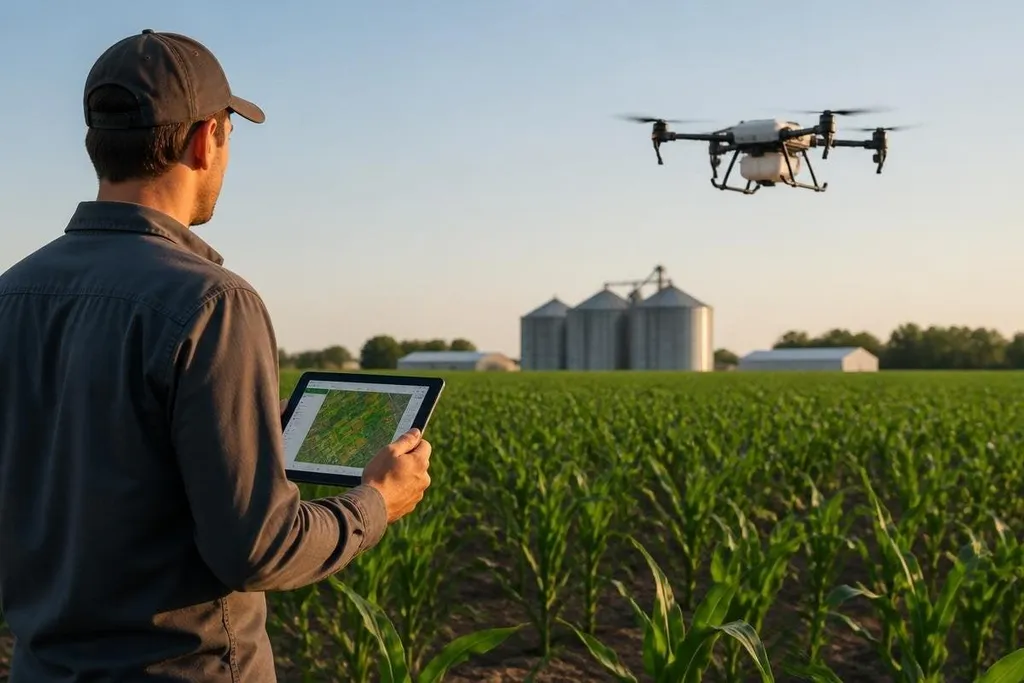
Selling a farm drone creates one sale. The work around it can create repeat income through flight services, crop data, and field treatment. For a new operator, the business question is which task a grower will pay to finish.
Quick read
- Flight services turn drone ownership into paid field work
- Crop images become useful when linked to a clear farm decision
- Spraying adds equipment, training, and rule checks to the business
The service business comes first
Growers may not need to buy a drone to use one. An operator can visit the field, plan the flight, collect images, and return a report that helps the grower choose the next task.
That service can focus on mapping a field, checking plant growth, finding damaged areas, or reviewing irrigation. The aircraft matters, but the customer pays for a result they can act on. A report that changes where a crew walks or where treatment is applied has a clearer price than a folder of images.
The operator also needs a repeat reason for the next visit. A single map may be enough for one decision.
A planned set of flights can show how a crop area changes after rain, treatment, or irrigation, provided the customer has a use for each report.
Crop data needs a useful format
Images alone don't make a strong product. Someone has to sort them, compare them, and explain what deserves attention.
That creates room for software work and reporting services. A business could turn drone images into field maps, mark areas for inspection, or send task lists to a farm team. The exact product depends on the crop, the equipment already used on the farm, and the decision the customer wants to make.
A field map only earns its price when it changes a farm decision. When you read Robot24.com, check whether a farming-drone report names the aircraft, field task, and customer decision it supports. Those details help a buyer price the service around the work that follows the flight.
The weak point is trust. A report must explain how the image was collected and what it can support. Weather, light, crop height, and flight settings can change the result, so a service needs a repeatable process and a clear note about limits.
Spraying adds a different business model
Spraying drones move the business from observation to field treatment. That can create paid work, but it also adds tanks, pumps, batteries, nozzles, cleaning, and safe chemical handling.
The work has to be planned around refill time, battery changes, field access, and drift control. A drone that flies well in a test area may still make a poor service business if the operator spends too long moving equipment between rows.
Local aviation, privacy, and pesticide rules belong in the first cost check. Rules differ by location, and the operator may need approvals, records, training, or a licensed partner before taking paid jobs. Those details can decide if spraying is practical.
Sell the work around the aircraft
Hardware sales are one route, but they aren't the only one. Dealers and service firms can earn from setup, operator training, repairs, spare batteries, flight planning, data processing, and software connections.
The buyer may also need help fitting drone work into an existing process. That could mean sending a map to a farm management system, naming files in a format the team can use, or setting a schedule for field checks. Small pieces of work can matter when they remove a task from the buyer's day.
I’d put a repeat service ahead of a hardware shop because recurring field work gives the business a clearer reason to stay in contact with the customer.
Check the business before buying equipment
Use this list to test the idea on paper before paying for a drone or software package:
- Name the task. Write down the field job, the person who needs it, and the decision that follows.
- Ask who pays. A grower, crop adviser, chemical applicator, or farm contractor may value the same flight differently.
- Price the whole job. Include travel, batteries, repairs, data work, insurance, training, and time spent writing the report.
- Check local rules. Confirm flight limits and any requirements for image collection or chemical use in the target area.
- Test demand first. Ask potential customers to describe a paid job they would book, rather than asking if drones seem useful.
The best starting point is a narrow task with a clear buyer and a repeat need. If the customer can't say what decision the drone report or field treatment will change, the aircraft is still an expense, not a business.