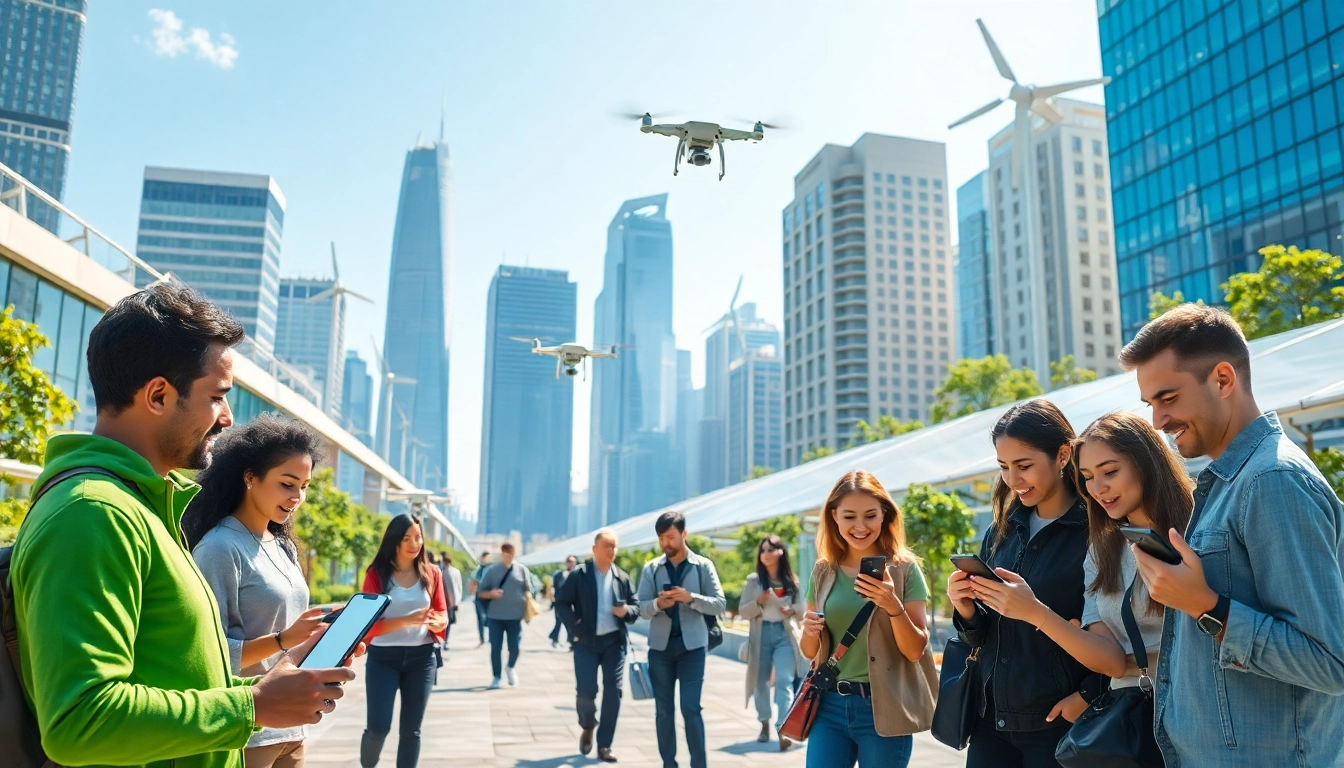
Introduction to Technology and Its Impact
In the modern era, the term Technology encompasses a vast range of tools, systems, and processes that have a profound influence on human life. Broadly defined, it is the application of scientific knowledge for practical purposes, particularly in industrial contexts. As society develops, the role of technology continues to evolve, shaping the way we communicate, work, and live. Understanding its complexities and implications is essential in today’s rapidly advancing world.
What is Technology?
Technology refers to the methods, systems, and processes used to create tools and products aimed at solving problems or performing specific tasks. This definition broadens when considering various fields such as information technology, biotechnology, engineering, and more. Essentially, technology enables individuals and organizations to enhance their capabilities and improve efficiency.
The Evolution of Technology Over Time
The history of technology dates back to ancient human civilization when basic tools were developed to meet fundamental needs. Over time, technological advancements accelerated dramatically—from the invention of the wheel to the advent of the internet. Each wave of innovation has created new industries and transformed existing ones, leading to increased productivity and changes in societal structures.
For instance, the Industrial Revolution marked a significant turning point in technology use. It introduced machines that enhanced manufacturing and transportation, ultimately altering the economic landscape. The digital revolution that began in the late 20th century further transformed communication, access to information, and business practices, laying the groundwork for today's interconnected world.
The Role of Technology in Everyday Life
Today, technology is omnipresent; it influences nearly every aspect of daily life. From smartphones that connect us to the world to smart home devices that manage our energy consumption, technology improves convenience and efficiency. It also fosters connections, allowing people to share ideas, cultures, and experiences across vast distances. In the realm of education, technology has opened up new avenues for learning and knowledge sharing, making quality education more accessible to diverse populations.
Types of Technology
Information Technology: A Key Player
Information Technology (IT) is a critical domain within the broader spectrum of technology. It involves the use of computers, networks, and software to manage and process information. As organizations increasingly rely on data-driven decision-making, IT plays a vital role in facilitating operations, supporting data storage, and enhancing communication.
One of the most significant trends in IT is the rise of cloud computing, which allows businesses to store and access data over the internet rather than on localized servers. This transition not only reduces costs but also increases flexibility and scalability for companies of all sizes.
Medical Technology Advancements
Medical technology has seen remarkable advancements that have transformed healthcare delivery and patient outcomes. Innovations such as telemedicine, robotic surgery, and wearable health monitors enhance the ability to diagnose, treat, and manage health conditions. For instance, telemedicine has become increasingly important during health crises, allowing patients to consult with healthcare professionals remotely.
Moreover, medical imaging technologies—like MRI and CT scans—have revolutionized the way physicians can visualize internal body structures, leading to more accurate diagnostics. Advances in biotechnology, such as gene editing and personalized medicine, promise to further innovate treatment protocols, catering to individual genetic profiles.
Environmental Technology and Sustainability
Environmental technology focuses on developing solutions that protect the environment and promote sustainable practices. As concerns about climate change grow, technologies that enhance energy efficiency and reduce waste are increasingly critical. Renewable energy sources, such as solar and wind power, exemplify such innovations that aim to mitigate the adverse effects of fossil fuel consumption.
Moreover, sustainable agriculture technologies, like precision farming, use data analytics to optimize crop yields while minimizing resource use. These advancements not only bolster food security but also contribute to environmental conservation, showcasing the interplay between technology and sustainable practices.
Benefits of Embracing Technology
Enhancing Communication and Connectivity
One of the overarching benefits of technology is its ability to enhance communication and connectivity. Social networks, messaging apps, and video conferencing tools have transformed how individuals interact, enabling instant communication across geographical barriers. This connectivity is invaluable for personal relationships and professional collaboration.
Improving Efficiency in Workplaces
Technology automates repetitive tasks, streamlining processes and enhancing productivity in the workplace. For instance, project management software helps teams coordinate efforts, set deadlines, and track progress, resulting in increased project efficiency. Furthermore, the integration of artificial intelligence (AI) into business processes allows for data analysis and insights that inform decision-making, ensuring organizations remain competitive and responsive to market changes.
Driving Innovation and Creativity
Technology serves as a catalyst for innovation and creativity in various domains. By providing tools that facilitate design, simulation, and prototyping, technology empowers individuals and businesses to experiment with new ideas and solutions. For example, 3D printing has revolutionized product development, allowing for rapid prototyping and customization in industries ranging from fashion to aerospace.
Challenges Associated with Technology
The Digital Divide: Access and Inequality
Despite the numerous benefits technology provides, it also presents challenges, notably the digital divide. This term refers to the gap between those with easy access to digital technologies and those without. Economic disparities can limit access to necessary devices and high-speed internet, preventing some populations from fully participating in the digital age.
Efforts to bridge this gap must be prioritized, as technology increasingly dominates educational and employment opportunities. Programs that provide subsidized internet access and technology training can help mitigate inequalities and foster inclusivity.
The Impact of Technology on Privacy
The rapid advancement of technology has raised significant concerns regarding privacy. The collection of personal data by businesses and governments can lead to breaches of privacy and the unauthorized use of sensitive information. In an era where data is often viewed as a commodity, maintaining robust privacy protections is essential to safeguarding individual rights.
Organizations must adhere to strict data protection regulations and implement transparency in how they collect, store, and utilize user data. Consumer awareness and education are also critical factors in cultivating a culture of responsibility regarding privacy.
Addressing Cybersecurity Threats
As technology evolves, so do the threats associated with its use. Cybersecurity is an ever-growing concern, with cyberattacks becoming more sophisticated and prevalent. Organizations must invest in comprehensive cybersecurity measures to protect their systems and data from breaches.
This includes regular updates to software, implementation of firewalls, and employee training to recognize potential phishing attempts. Additionally, a proactive cybersecurity strategy can help mitigate risks and respond effectively to incidents when they occur.
Future Trends in Technology
Artificial Intelligence and Machine Learning
The future of technology is inextricably linked to the expansion of artificial intelligence (AI) and machine learning. These technologies enable systems to learn from data, improving their performance over time without explicit programming. As AI continues to advance, it will transform numerous sectors, affecting everything from healthcare to transportation.
AI can enhance predictive analytics, allowing organizations to anticipate consumer behavior and optimize their services accordingly. Furthermore, automation powered by AI can increase efficiency and reduce operational costs, positioning businesses to thrive in an increasingly competitive landscape.
Blockchain Technology and Its Applications
Blockchain technology, originally conceptualized for cryptocurrencies, has found a multitude of applications beyond finance. Its decentralized and transparent nature enhances security and trust in various transactions, particularly in supply chain management, healthcare, and voting systems.
By allowing for secure, immutable records, blockchain can reduce fraud, streamline processes, and improve operational efficiencies. As industries continue to explore its potential, blockchain could usher in a new era of interoperability and transparency.
The Rise of Quantum Computing
Quantum computing represents the next frontier in computational technology. By leveraging the principles of quantum mechanics, quantum computers can process information at unprecedented speeds, solving complex problems beyond the capabilities of today's classical computers. This technology has the potential to lead breakthroughs in various fields, including cryptography, drug discovery, and artificial intelligence.
Although still in its infancy, the evolution of quantum computing could significantly alter the landscape of technology, necessitating a reevaluation of security measures and computational strategies worldwide.